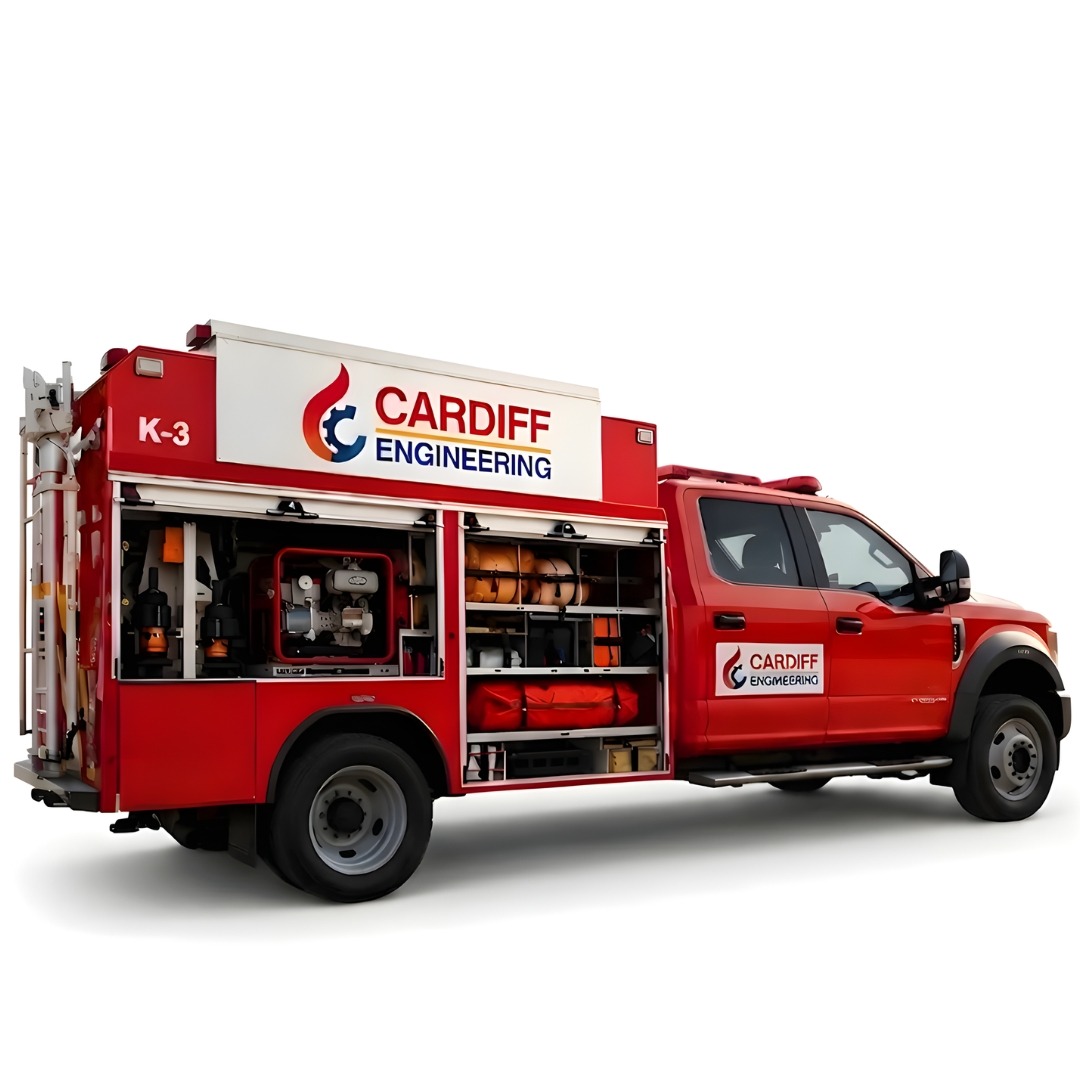
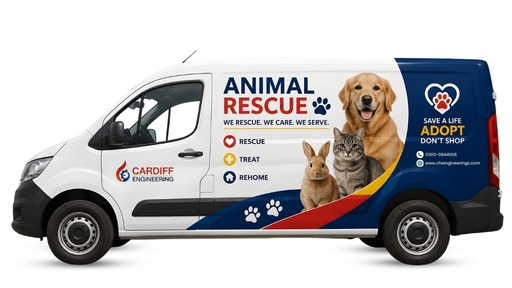
Animal Rescue Vehicles are among the fastest growing categories in special purpose vehicle (SPV) fabrication today and for good reason. As animal welfare awareness rises globally, rescue organizations, veterinary teams, wildlife departments, and municipal authorities are investing in purpose built units designed to handle emergencies that standard vehicles simply cannot manage.
At Cardiff Engineering Services, we design and fabricate custom Animal Rescue Vehicles tailored to the specific operational demands of rescue teams across Pakistan and beyond. In this guide, we break down everything you need to know.
What Is an Animal Rescue Vehicle?
An Animal Rescue Vehicle is a specially converted or purpose-built unit equipped with the tools, storage, containment systems, and medical supplies needed to safely capture, treat, and transport animals in emergency or non-emergency situations.
These vehicles serve a broad range of operators:
- Wildlife and forest departments responding to injured or trapped wild animals
- Animal shelters and humane societies conducting field rescues
- Veterinary teams providing on-site emergency care
- Municipal animal control authorities
- Disaster response organizations (floods, earthquakes, wildfires)
- Private zoos, sanctuaries, and farms
Unlike a standard van or pickup, a properly fabricated animal rescue unit is engineered from the ground up — with purpose-designed compartments, climate control, specialized equipment mounts, and safety systems that protect both the animal and the responder.
Why Purpose Built Matters: The Problem With Improvised Vehicles
Many rescue operations in South Asia still rely on improvised transport a pickup truck with a makeshift cage, or a van hastily fitted with a kennel. This approach creates serious problems:
- Inadequate restraint increases risk of injury to the animal and handler
- No climate control causes heat stress or hypothermia, especially during Pakistan’s extreme summers and winters
- Lack of onboard equipment means responders carry only what fits in a bag
- No separation between species leads to stress and aggression during multi-animal rescues
A purpose built animal rescue vehicle eliminates all of these risks by design.
Key Features of a Professional Animal Rescue Vehicle
1. Modular Kennel & Containment System
Multiple stainless steel or heavy duty polymer kennels in varying sizes from small (cats, rabbits) to large (dogs, calves). Kennels are slide out or swing-door accessible, properly ventilated, and easy to disinfect.
2. Climate Control Unit
A dedicated HVAC system that maintains a safe temperature range inside the animal compartment, independent of the cabin critical for transporting sick, injured, or heat stressed animals.
3. Onboard Water Supply & Wash Down System
A clean water tank and pressure pump for on-site animal washing, wound irrigation, and equipment decontamination.
4. Medical & First Aid Compartment
Lockable storage for emergency veterinary supplies: bandages, splints, sedatives (where licensed), IV drips, oxygen delivery, and vital signs monitoring equipment.
5. Animal Capture Equipment Storage
Organized mounts for catch poles, nets, tranquilizer equipment, snares, slip leads, gloves, and protective gear all within arm’s reach of the responder.
6. Hydraulic or Foldout Loading Ramp
For larger animals such as sheep, goats, or injured dogs that cannot be lifted a hydraulic tailgate ramp allows safe, injury free loading without additional equipment.
7. Lighting Interior & Exterior
LED work lights for nighttime rescues and interior compartment lighting for medical procedures in low visibility environments.
8. Communication & GPS System
Integrated radio, GPS fleet tracking, and emergency communication systems so dispatch always knows the vehicle’s location and status.
9. Generator or Shore Power Connection
For extended field operations, an onboard generator or external power inlet keeps medical equipment and climate systems running when the vehicle is parked.
10. Body Markings & Signage
High visibility livery, emergency lighting bars, and sirens where operationally required so bystanders and traffic give way to a responding animal rescue unit.
Types of Animal Rescue Vehicles We Fabricate
At Cardiff Engineering Services, we build across a wide spectrum of animal emergency and welfare vehicle types:
Domestic & Stray Animal Rescue Van
Built on a mid-size van or light commercial chassis, this unit handles urban and peri-urban rescue of dogs, cats, and small livestock. Features multi-kennel layout, capture equipment storage, and a wash-down bay.
Wildlife & Large Animal Rescue Truck
Built on a heavy duty truck chassis with reinforced flooring, large containment pens, and a hydraulic loading system. Designed for forest departments, national parks, and wildlife rescue NGOs dealing with deer, boars, and larger wildlife.
Livestock & Farm Animal Emergency Unit
Configured for cattle, horses, and large farm animals. Features a walk-in rear compartment, padded walls, and a dedicated veterinary treatment zone.
Disaster Response Animal Rescue Vehicle
A high-clearance, 4×4 capable unit for flood, earthquake, or fire disaster response with extended range fuel, water supplies, and capacity for multi-animal simultaneous transport.
Animal Control & Municipal Rescue Van
Designed for municipal governments and city animal control departments. Includes evidence documentation equipment, animal identification scanning (microchip reader), and multi-species containment.
Animal Rescue Vehicles in Disaster Response: A Growing Need
Pakistan has seen an increasing frequency of climate-related disasters in recent years — from the devastating 2022 floods to recurring heatwaves and urban flooding in Lahore, Karachi, and Peshawar. In each event, thousands of animals — livestock, working animals, and pets — are left stranded, injured, or displaced.
Globally, animal rescue organizations deploying specialized vehicles have demonstrated the scale of impact possible: in 2024 alone, one major team rescued and sheltered over 1,200 animals across seven disaster responses.
Yet in Pakistan, the infrastructure for organized animal rescue — including dedicated vehicles — remains severely underdeveloped. This represents both a welfare gap and a significant opportunity for organizations willing to invest in proper equipment.
Why Animal Welfare Organizations Are Investing in SPVs
The global special purpose vehicle market is expanding rapidly across all categories. Ground-based rescue platforms are holding the fastest growth rate at 6.35% CAGR, driven by urbanization and increasing demand for all-terrain vehicles capable of confined-space and disaster-zone rescues.
For animal welfare, the drivers are similar:
- Urban expansion is bringing humans and animals into closer, more frequent conflict — increasing the volume of stray, injured, and displaced animals in cities
- Rising pet ownership in Pakistan’s middle class is creating demand for organized rescue infrastructure
- Government mandates for humane animal control are pushing municipalities toward professional vehicles
- NGO and donor funding increasingly requires organizations to demonstrate operational capacity — and a proper rescue vehicle is a tangible, fundable asset
The CFS Engineerings Advantage
Cardiff Engineering Services is based in Lahore’s Thokar Niaz Baig industrial estate, one of Pakistan’s leading centers for specialized vehicle fabrication. We build every vehicle to client specification, with no off-the-shelf compromises.
What sets our animal rescue vehicles apart:
- Custom chassis selection — we help you choose the right base vehicle for your terrain, payload, and budget
- In house metal fabrication — all bodywork, compartments, and mounts fabricated at our facility with full quality control
- Veterinary consultation integration — we work with your vet team to ensure the medical compartment meets clinical standards
- Full after sales support — maintenance, spare parts, and modification support post-delivery
- Local manufacturing, international standards — built in Pakistan, engineered to international rescue vehicle specifications
How to Specify Your Animal Rescue Vehicle
When you reach out to CFS Engineerings for a quote, we’ll guide you through the following questions to ensure the right build:
- What types of animals will you primarily rescue? (domestic, wildlife, livestock)
- What is your primary operating terrain? (urban, rural, off-road, flood-prone)
- What is your team size? (number of responders riding in the vehicle)
- Do you require onboard veterinary treatment capability?
- What capture and immobilization equipment do you currently use?
- Do you require emergency lighting and sirens?
- What is your expected payload capacity?
- What is your budget and delivery timeline?
From a single van conversion to a full fleet procurement, we handle projects of all scales.
Animal Rescue Kits & Equipment
Beyond vehicle fabrication, CFS Engineerings also supplies the full complement of animal rescue kits — designed for safe, humane capture, transport, and care. Our kits are used by shelters, veterinary teams, and emergency responders and include:
- Capture poles and nets
- Animal restraint harnesses
- Transport crates and carriers
- Emergency first aid supplies
- Personal protective equipment (PPE) for handlers
Whether you’re equipping a new vehicle or upgrading an existing fleet, we can supply the complete kit.
Cardiff Engineering Services is a premier Pakistani manufacturer specializing in Special Purpose Vehicles (SPVs), emergency response units, and customized mobility solutions. With a strong commitment to quality, innovation, and reliability, the company serves a diverse range of clients, including government agencies, non-governmental organizations (NGOs), veterinary institutions, healthcare providers, and private sector operators across Pakistan and neighboring regions. Cardiff Engineering Services delivers purpose-built vehicles designed to meet critical operational requirements, ensuring efficiency, safety, and performance in demanding environments.