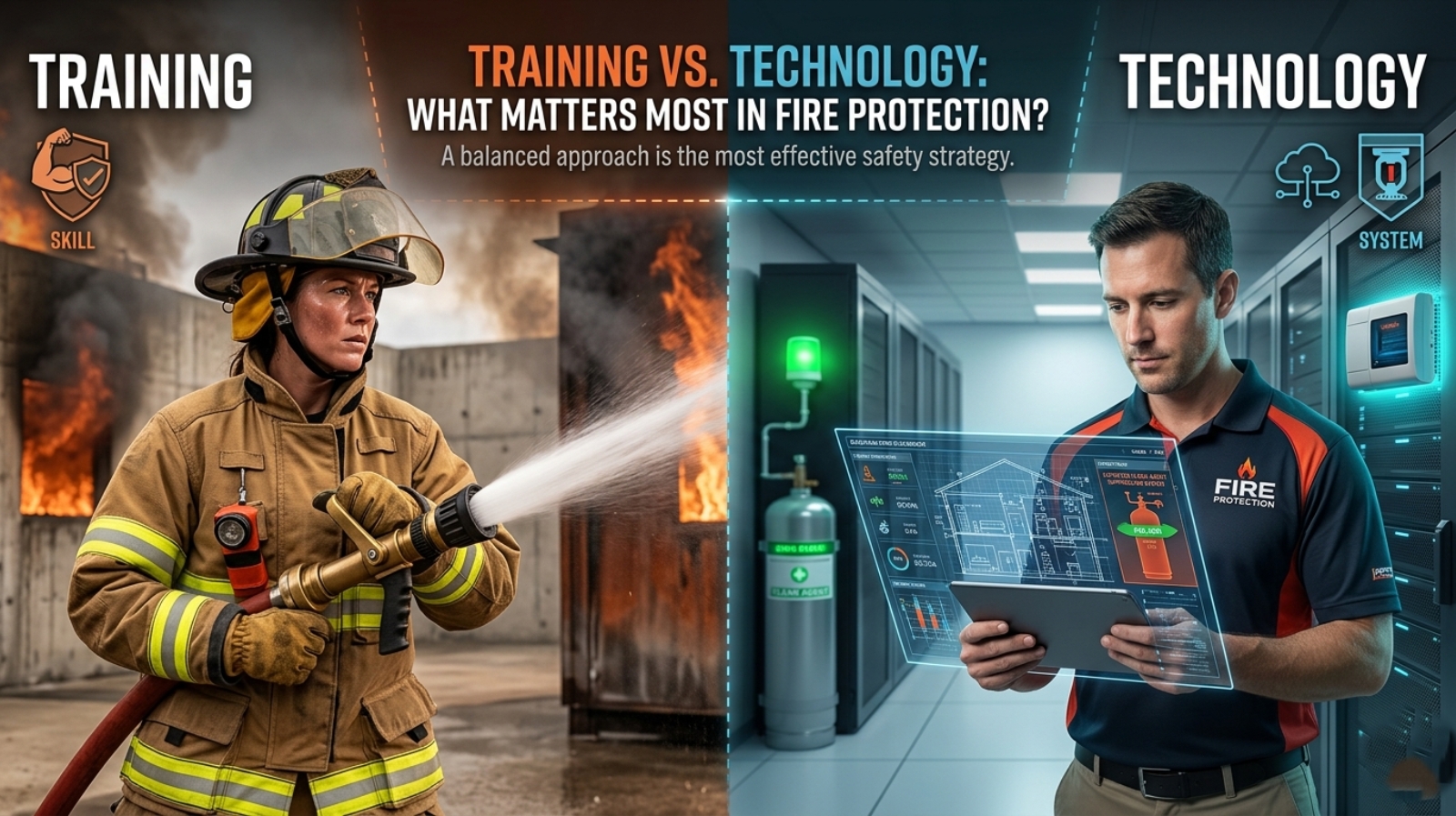
Fire protection is an essential aspect of workplace safety, whether in offices, industrial facilities, or educational institutions. In recent years, technology has advanced rapidly, offering smart fire detection systems, automated suppression solutions, and IoT-enabled monitoring tools. But despite these innovations, one question remains: Which is more important — advanced technology or well-trained personnel?
At CFS Engineering Services, we believe the answer lies in balance. Technology can enhance safety and response times, but without trained personnel, even the most sophisticated systems may fail during a real emergency. This article explores the interplay between training and technology and provides insights into achieving optimal fire protection.
1. The Role of Technology in Fire Protection
Modern fire protection technology has transformed the way organizations detect and respond to emergencies. Key examples include:
- Smart fire alarms and detectors – Systems that can detect smoke, heat, or gas and alert personnel instantly.
- Automated suppression systems – Sprinklers, gas suppression systems, and foam solutions that activate automatically.
- IoT-enabled monitoring – Sensors connected to a central system for real-time tracking and reporting.
- Emergency communication systems – Automated notifications to employees, management, and local emergency services.
Benefits of technology:
- Faster detection and response times.
- Reduced human error in identifying hazards.
- Data collection for compliance reporting and safety audits.
- Integration with other safety systems for a comprehensive approach.
While these technologies provide efficiency and accuracy, they cannot replace human judgment, situational awareness, and manual intervention when emergencies occur.
2. The Importance of Training
Training personnel is equally, if not more, important than technology. Well-trained staff can:
- Operate equipment safely and effectively.
- Conduct proper evacuation procedures.
- Recognize hazards before they escalate.
- Make critical decisions under stress when technology fails or provides incomplete information.
Key components of fire safety training:
- Fire extinguisher use – Knowing which type to use for different classes of fire.
- Evacuation drills – Practicing structured evacuation to minimize chaos during real emergencies.
- First aid and rescue skills – Ensuring basic life-saving procedures are known and practiced.
- Equipment familiarity – Training on fire alarms, suppression systems, and emergency communication tools.
At CFS Engineering Services, our certified training programs ensure staff not only understand the theory but also gain hands-on experience, which is critical in emergencies.
3. Why Balance Matters
Neither technology nor training alone can provide complete protection. Consider the following scenarios:
- Advanced system, untrained staff:
A facility may have state-of-the-art fire suppression and detection systems. But if employees panic, don’t know evacuation routes, or misuse fire extinguishers, the technology alone may not prevent damage or injury. - Well-trained staff, outdated technology:
Staff may be trained perfectly, but without reliable alarms, suppression systems, or monitoring, response times may be slower, leading to preventable losses.
The solution: Integrate both elements:
- Use technology to detect, alert, and mitigate hazards efficiently.
- Train personnel to respond correctly, make decisions, and maintain systems.
- Conduct regular drills and system tests to ensure technology and staff work together seamlessly.
4. Real-World Examples
- In industrial settings, automatic suppression systems can reduce fire damage, but trained staff ensures machinery is safely shut down and personnel are evacuated.
- In offices and schools, fire drills teach employees and students how to respond, while alarms and sprinklers provide timely alerts to prevent escalation.
- During large-scale emergencies, like chemical fires or electrical fires, technology may fail or require human override — highlighting the critical role of trained personnel.
5. Best Practices for Integrating Training and Technology
- Conduct regular fire drills – Include simulations where both technology and personnel respond together.
- Update training programs – Incorporate new equipment, updated safety codes, and lessons learned from past incidents.
- Maintain and test equipment – Regular inspections ensure that detection and suppression systems are functional when needed.
- Document procedures and protocols – Clear instructions for staff help them act decisively in emergencies.
- Evaluate and improve – After drills or incidents, review performance and adjust training or technology as needed.
By combining modern technology with skilled, confident personnel, organizations can maximize safety and minimize risk.
Conclusion
Fire protection is not a choice between technology or training — it’s about creating a synergistic approach where both work hand in hand. Technology offers rapid detection, automated suppression, and monitoring, while trained personnel provide the judgment, quick action, and situational awareness that systems alone cannot replicate.
At CFS Engineering Services, we specialize in both advanced fire protection systems and comprehensive staff training programs, ensuring that organizations are prepared for any emergency. Investing in both areas creates a safer workplace, protects assets, and saves lives.